Contemporary
Painted finish
Green
Sage — Sculpted Island
a sage kitchen with a curved sculpted island, hand-finished in London
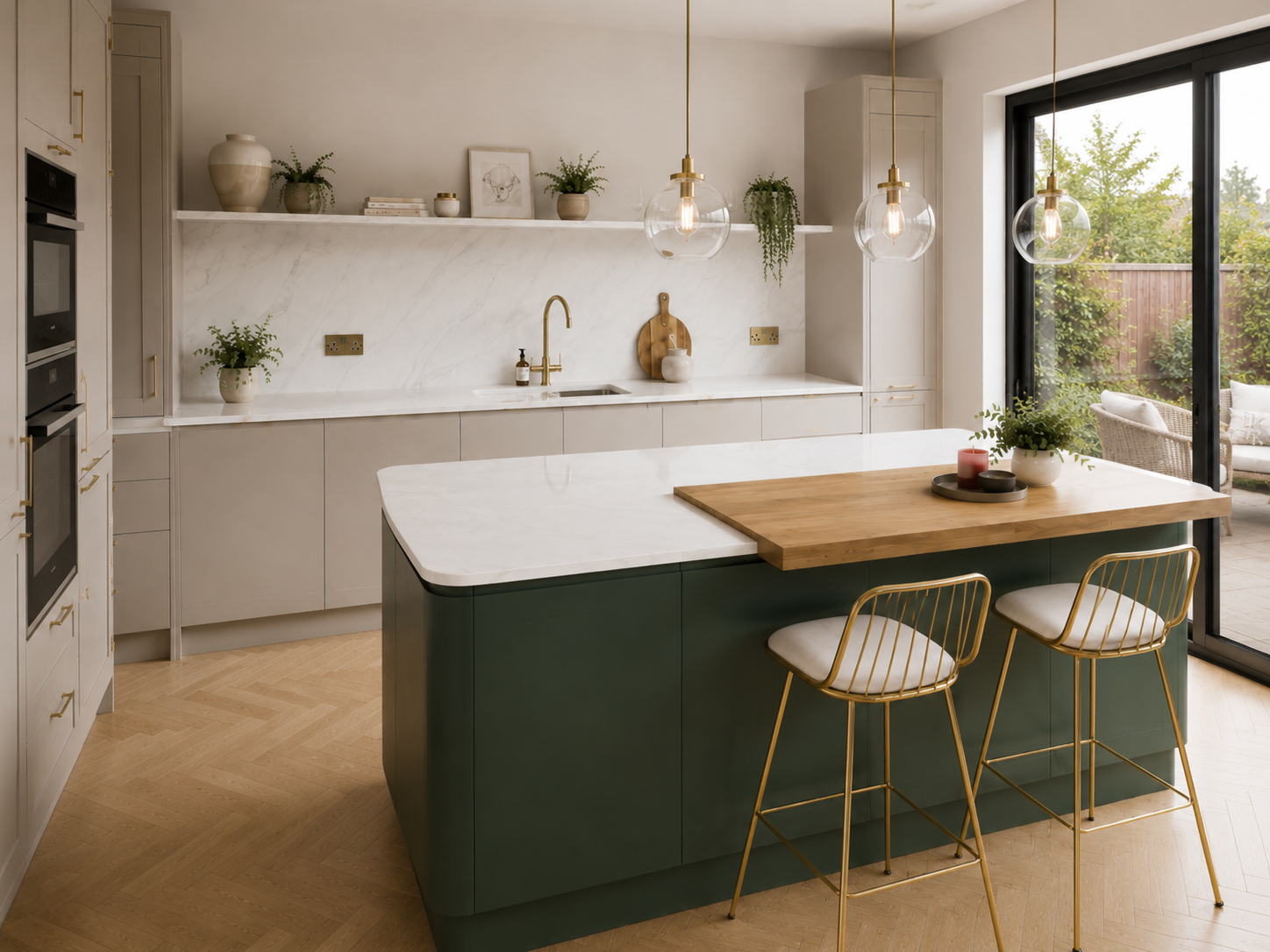
A curved island shaped like furniture rather than cabinetry, in soft sage with pale stone above. Curves cost more, and they |change a room| more than any colour.
— Specification
- Collection
- XXVI — Sage — Sculpted Island
- Style
- Contemporary
- Island
- Laminated curved carcass over CNC formers
- Stone
- Waterjet-cut top templated after installation
- Colour
- Soft sage, five-coat hand-sprayed
- Perimeter
- Fully integrated, handleless
- Added lead time
- A few days for curved joinery
- Typical footprint
- 20–36 m²
- Lead time
- Four weeks from signed drawings
- Installation
- 3–5 working days, in-house fitting team
Why curve an island
A radiused island end removes the pinch point that every rectangular island creates in circulation, and it softens an open-plan room in a way no material choice can. In practice, clients report that people gather around a curved island differently — the seating side has no corner to sit at the end of.
How the curve is built
Curved sections are laminated in the workshop from multiple thin layers of flexible board over a CNC-cut former, then veneered or sprayed. Stone tops are waterjet-cut to a template taken after the joinery is installed.
It is slower and more expensive than a straight run — typically adding a few days — and it is the detail that most distinguishes |bespoke joinery| from fitted furniture. German cabinetry, hand-finished in London.
Sage, stone and softness
A soft sage green suits the sculpted form: the colour has enough body to show the curve's shading without hard shadow lines. Pale stone above keeps the shape legible from across the room.
Integrated and quiet
The perimeter is deliberately plain and fully integrated so the island remains the only event in the room. Appliances sit behind matched fronts, and extraction is drawn into the ceiling.
— The kitchen in detail
What this kitchen is made of.
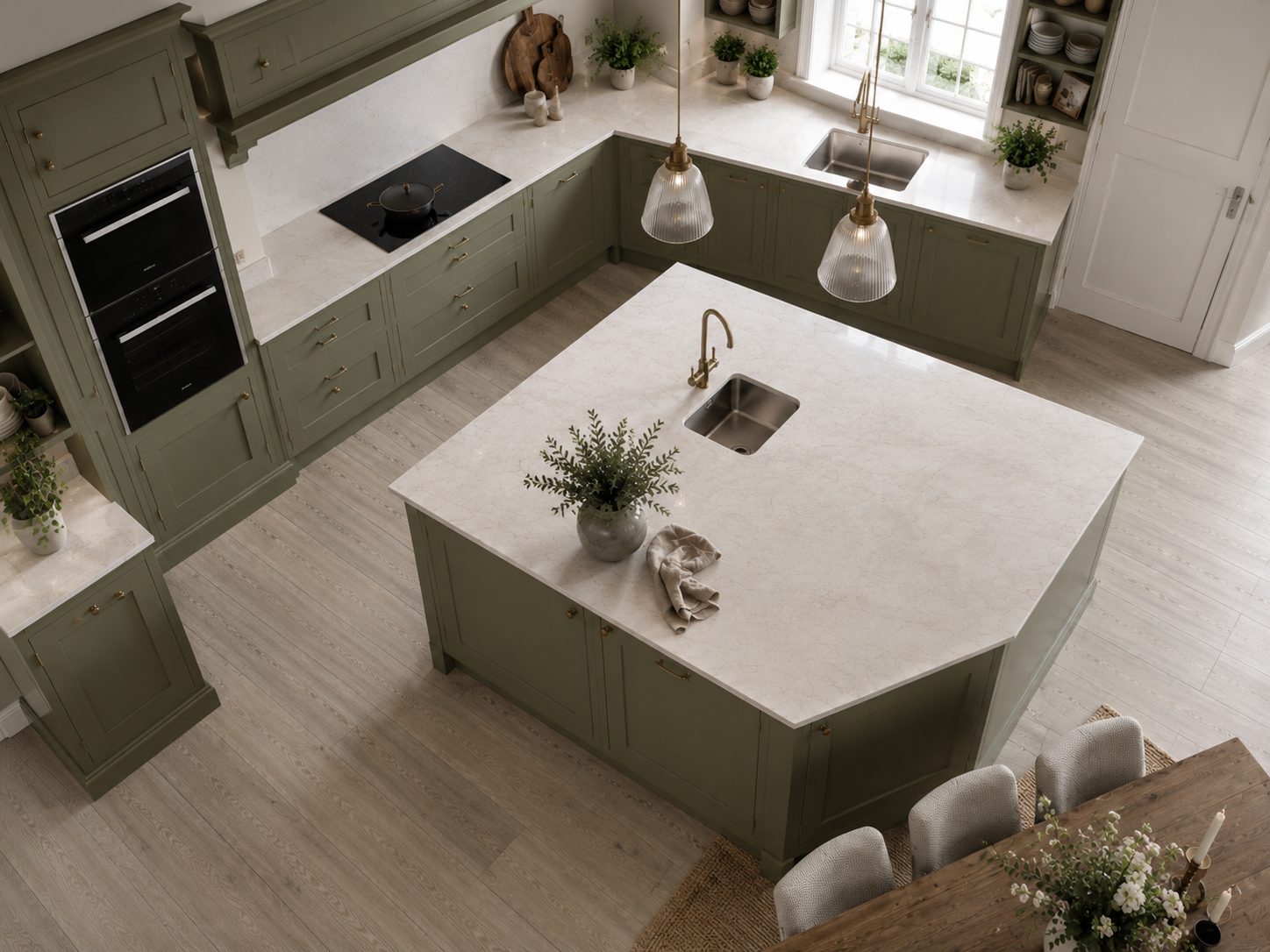
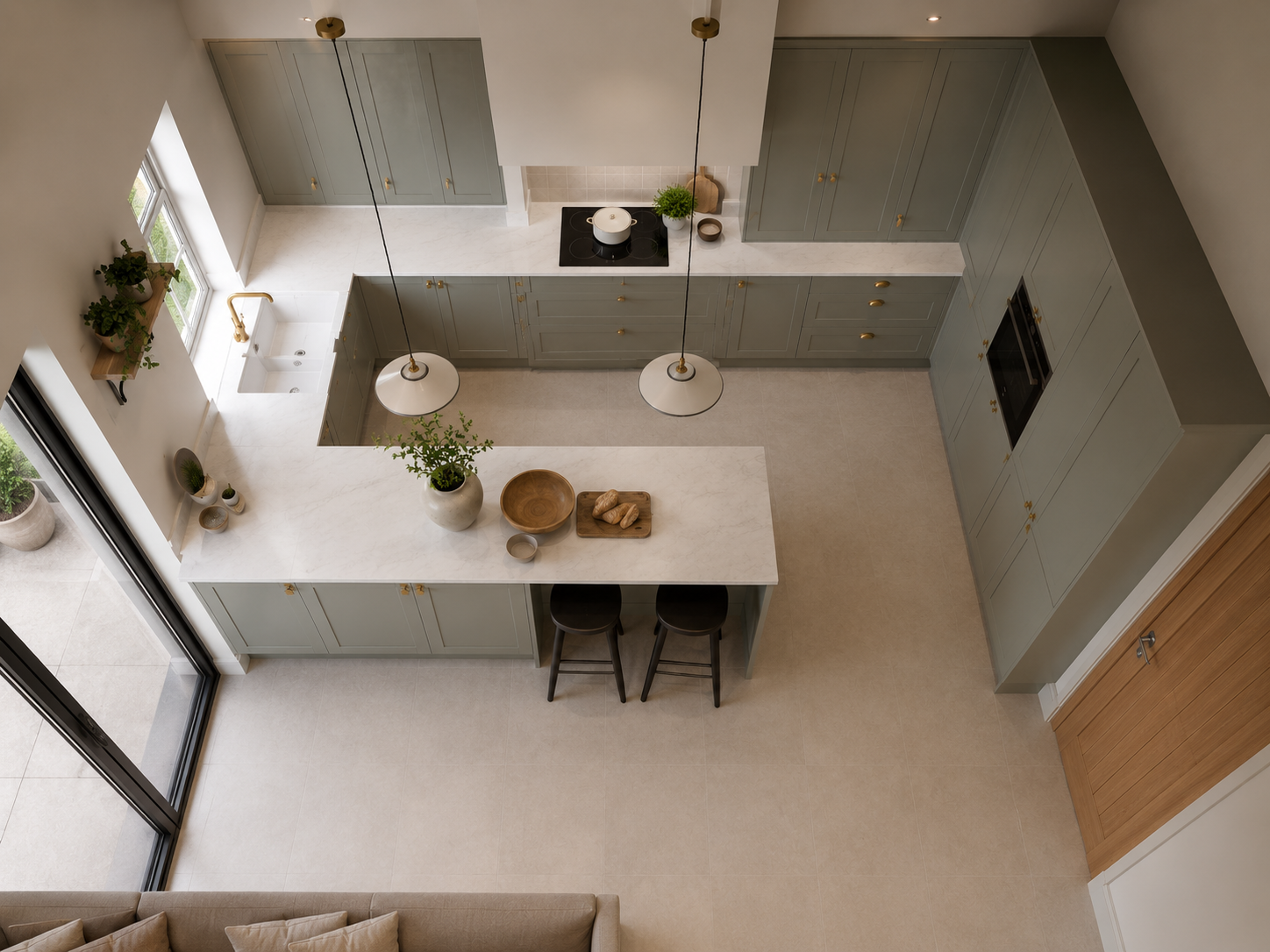
- Laminated curved joineryBuilt over CNC-cut formers in the workshop, not site-bent.
- Sage paintBody of colour that reveals the curve's shading.
- Waterjet-cut stoneTemplated after installation to match the built radius exactly.
- Warm oak flooringRun continuously beneath the island.
Bring the Sage — Sculpted Island kitchen into your home.
Request a QuoteNothing here is fixed.
Every kitchen we build is drawn to a specific room and a specific way of cooking. These are the modifications clients most often make to this model — the list is not exhaustive.
Island form
Curves are drawn to the room's circulation, not to a standard radius.
- Single radiused end, double-curved or full ellipse
- Fluted or reeded cladding around the curve
- Timber-clad curved end in oak or walnut
- Integrated curved seating with a 400 mm overhang
Colour
Sage as standard; the sculpted form suits soft, mid-depth colours.
- Sage, olive, clay, mushroom or powder blue
- Any Farrow & Ball, Little Greene or Paint & Paper Library colour
- Contrasting island against a pale perimeter
- Matte finish standard to keep the curve reading softly
Perimeter and integration
The island leads; everything else recedes.
- Handleless fully integrated perimeter runs
- Pocket-door pantry and appliance garage
- Ceiling or downdraft extraction
- Concealed island power and prep sink
How a Sage — Sculpted Island kitchen gets built.
- 01Consultation & surveyWeek 1On-site measure, brief, lifestyle and cooking audit.
- 02Design & technical drawingsWeek 2Elevations, renders, samples, services and appliance schedule signed off.
- 03Workshop buildWeek 3German cabinetry, hand-finished in our London workshop. Dry-assembled before it leaves us.
- 04Installation & stoneWeek 4Our own fitters — |never subcontracted| — set the kitchen, then worktops are templated, fitted and calibrated.
- Open-plan rooms where circulation is tight around a rectangular island
- Clients wanting one sculptural element rather than decoration
- Rooms visible from a living or dining space
- Contemporary extensions with generous floor area
Asked often.
Does a curved island cost much more?
Meaningfully more than a straight one — laminated formers, waterjet stone cutting and additional workshop time typically add 15 to 25 per cent to the island itself, and a few days to the programme.
Can the curve be clad in timber instead of painted?
Yes. Fluted oak or walnut around the radius is a popular alternative and shows the curve particularly well.
How much does a sculpted island kitchen cost in London?
Most projects fall between £42,000 and £98,000 fitted, with the island's geometry the main variable. No middlemen.
— Other kitchens you may like
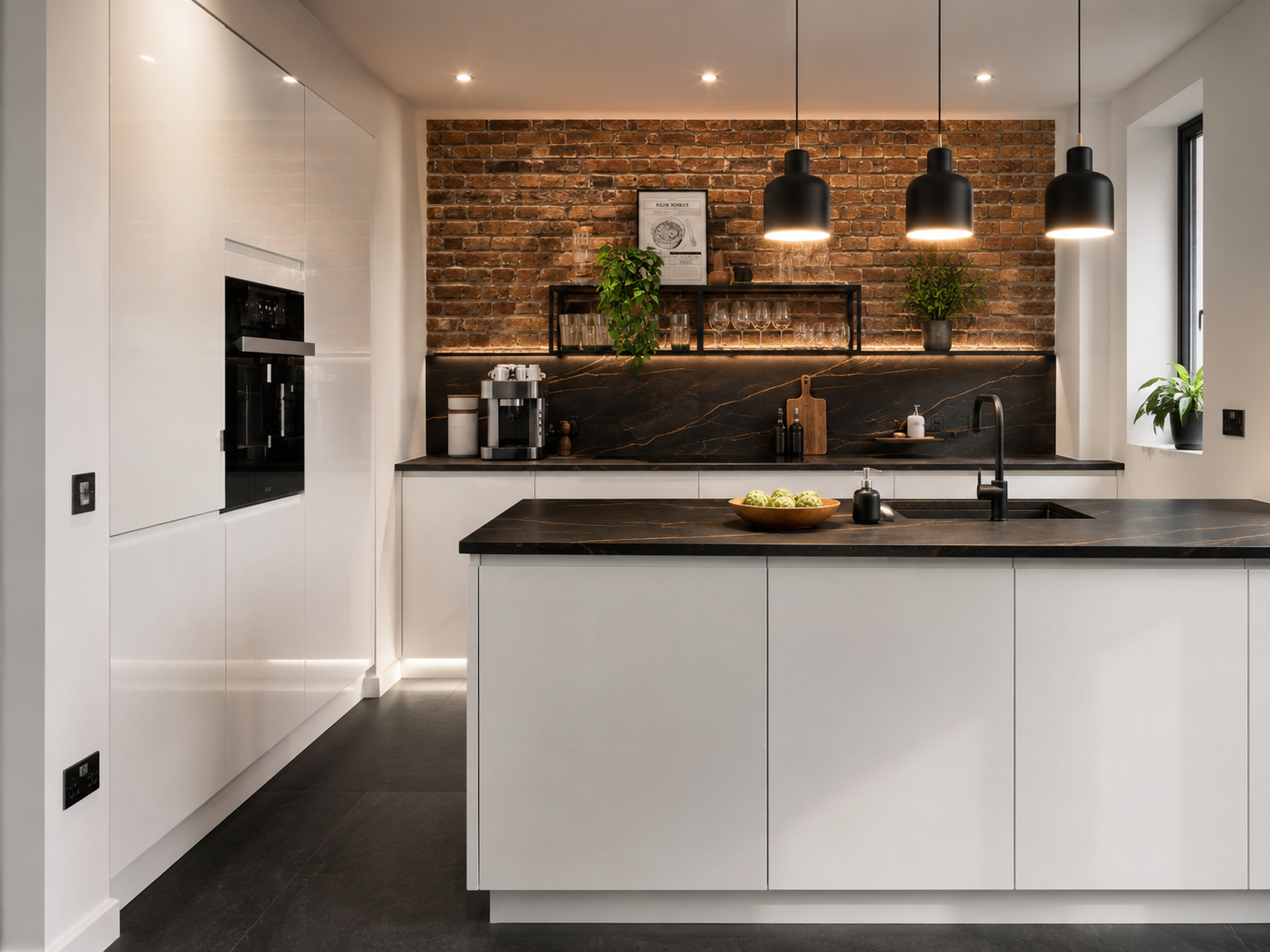
Start your own Sage — Sculpted Island.
Direct from the manufacturer — designed, built and fitted by Dominus Kitchens for private homes across Greater London and the UK.